

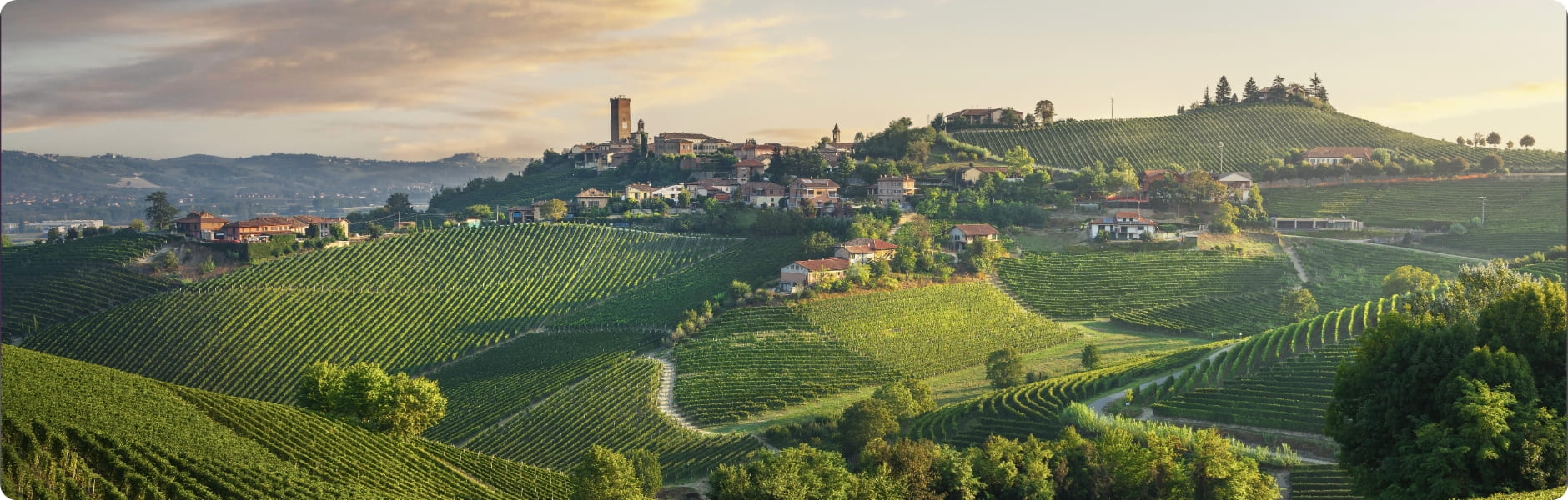
Territory
The Langhe
The Langhe Territory
Subject of literature and backdrop to countless stories, the Langhe are the origin and setting of our wines.
The Territory
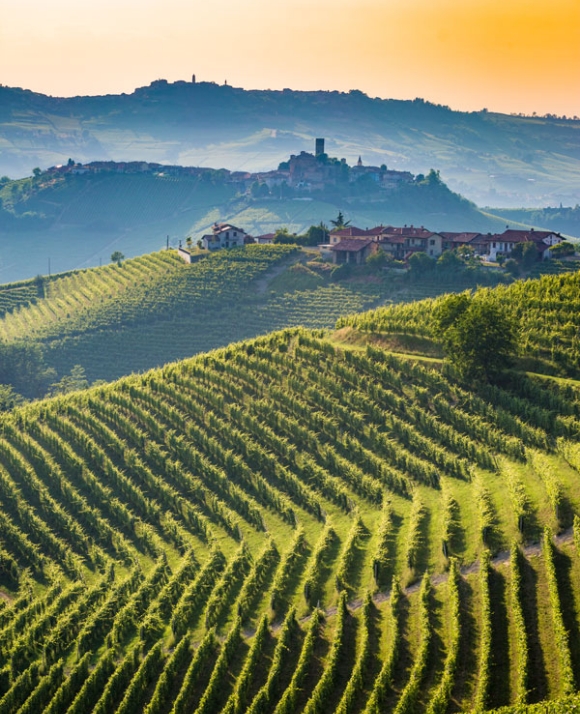
From Fenoglio to Pavese, the landscape goes from being the cold stage on which human vicissitudes unfold to becoming the co-protagonist, a place of nostalgia and the flavour of childhood. The soft hills and harsh vegetation of the Langhe emerge ever more prominently and become the unique territory that we all know, the subject of tourism and culture, passion and attention.
The Langhe are located in the southern part of Piedmont, at the foot of the Maritime Alps and the Ligurian Apennines. The name, of Celtic origin, means “tongues of land” and refers to the elongated hills, often with very steep sides, arranged in such a way as to run parallel to one another, forming many deep and narrow valleys. The Langa territory is one of the most generous regions in the world for the quality and variety of its viticulture productions.
The roots of this exceptionality are to be found in the particular geographical location, the suited climate and the rich subsoil that characterise these hilly areas and make them an environment with an abundantly rich biodiversity.
Oenotourism
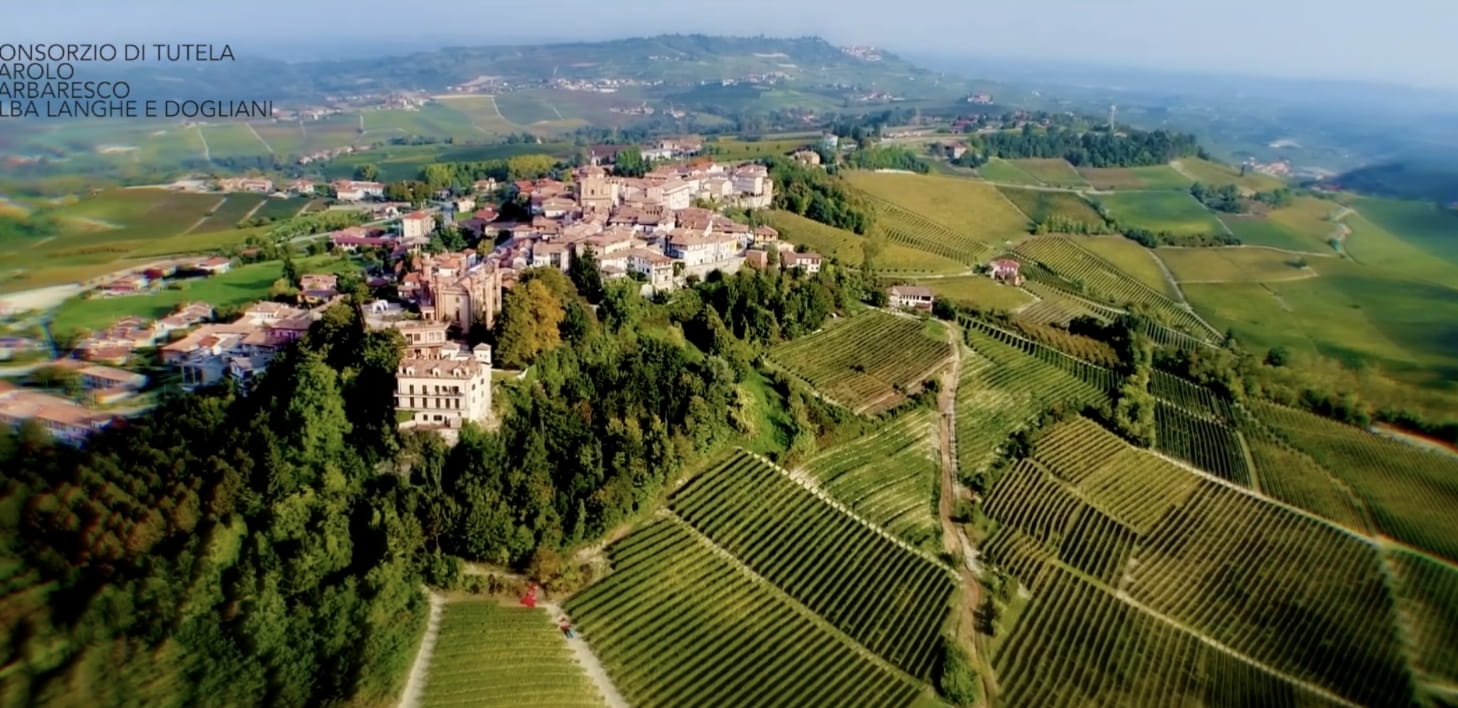
The uniqueness and exceptionality of the Langhe have made them an important destination for tourism and wine tourism in recent years, responding very well to the demand that has gradually emerged from both the Italian and international public. Care, hospitality and a family dimension are just 3 of the words that well describe what the territory can offer.
Gastronomic Pairings
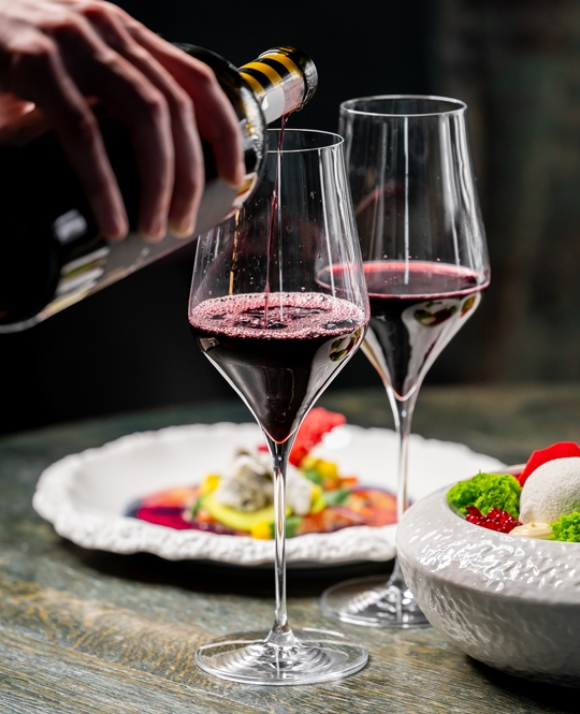
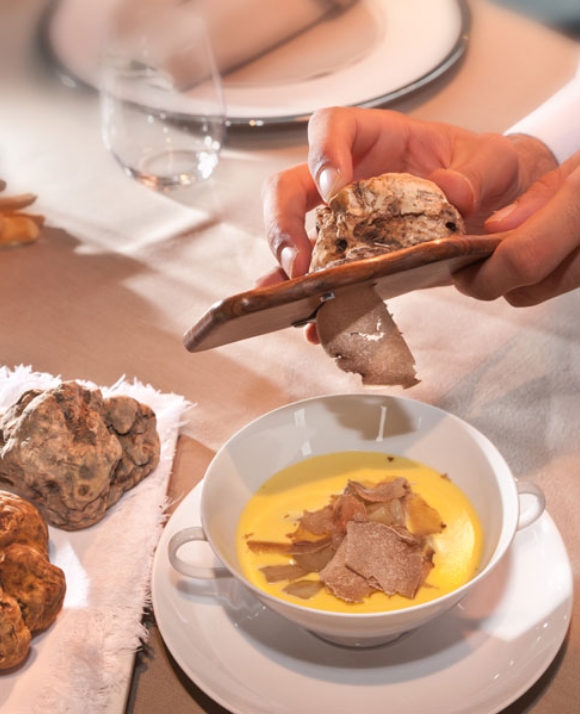
The Langhe, besides being the home of our wines, are known throughout the world also for the Tuber Magnatum Pico, the White Truffle for which the International White Truffle Auction of Alba is also organised.
In addition to the Hazelnut Piemonte IGP, also famous worldwide, among the typical traditional dishes found in all the restaurants and venues in the area are: Carne all’albese, Vitello tonnato, Tajarin and Ravioli del Plin.

