

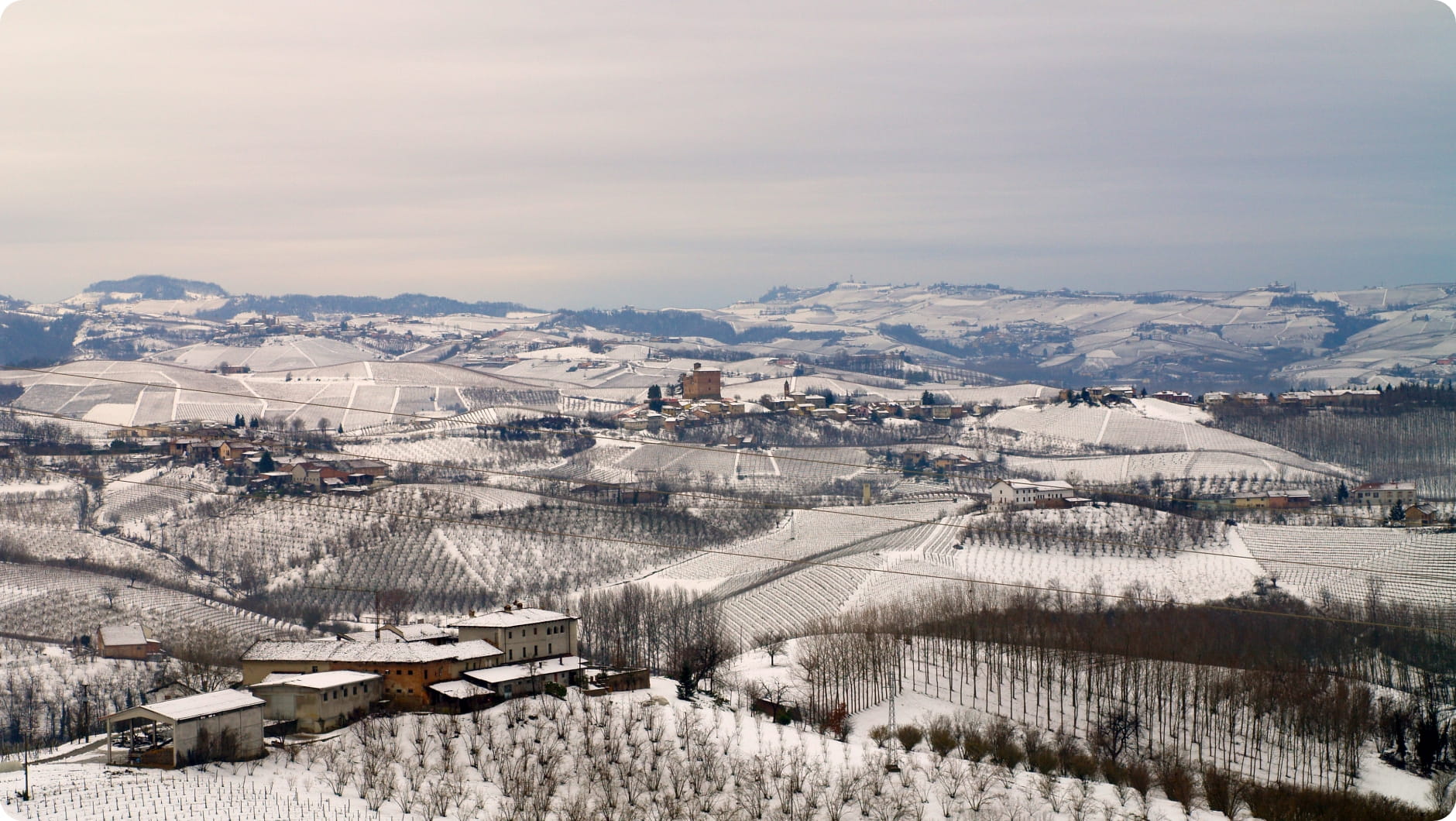
Territory
Climate & Geology
The Climate of the Langhe
The climate profile is one of the three elements that contribute, together with the soil and the hand of man, to determining the result we can appreciate in the glass.
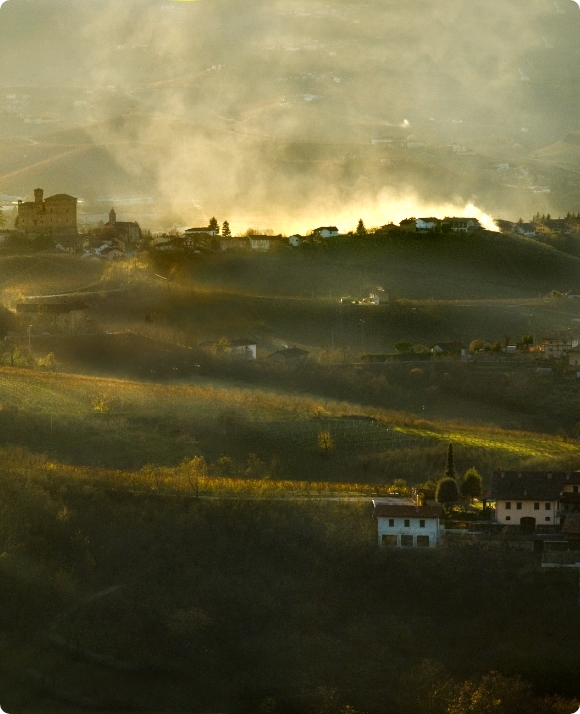
The Langhe area is dominated by a cold subcontinental temperate climate with precise characteristics found exclusively in this territory: the protective effect of the Alpine chain and the influence of mild and humid currents from the Ligurian Sea contribute to determining a climate context unique in all of Piedmont.
La presenza di valli e colline a quote altimetriche diverse, così come le differenti esposizioni e ventosità, creano un’incredibile varietà di microclimi diversi. Di conseguenza si generano condizioni estremamente particolari che consentono all’uva di declinarsi in varie espressioni.
Barolo Zone
The Barolo zone has intermediate temperatures, being positioned in a particular area protected from winds but influenced both by Alpine currents and by the rising of warm and humid air from the Tanaro valley. The three hill ridges that make up the zone determine a heterogeneity of landscapes and, consequently, microclimates.
Barbaresco Zone
The Barbaresco zone is generally more homogeneous, with milder temperatures and less abundant rainfall. The landscape characterised by narrow valleys generates greater wind exposure compared to the previous two zones.
Dogliani Zone
The Dogliani zone has the coolest climate, being closer to the Alps, and is characterised by narrow and high hill ridges facing the cold Cuneo plain.
The Soils of the Langhe
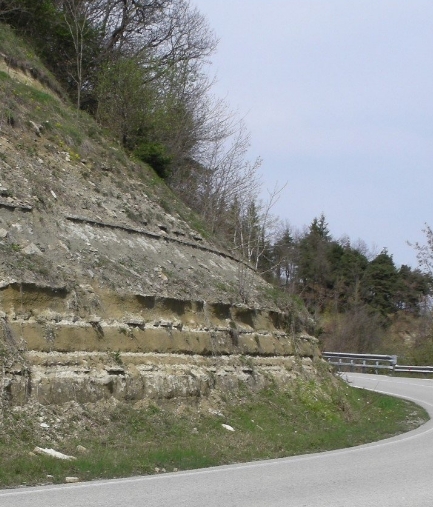
The Langhe soil has sedimentary and marine origin, deriving from the ancient Tertiary Piedmontese basin.
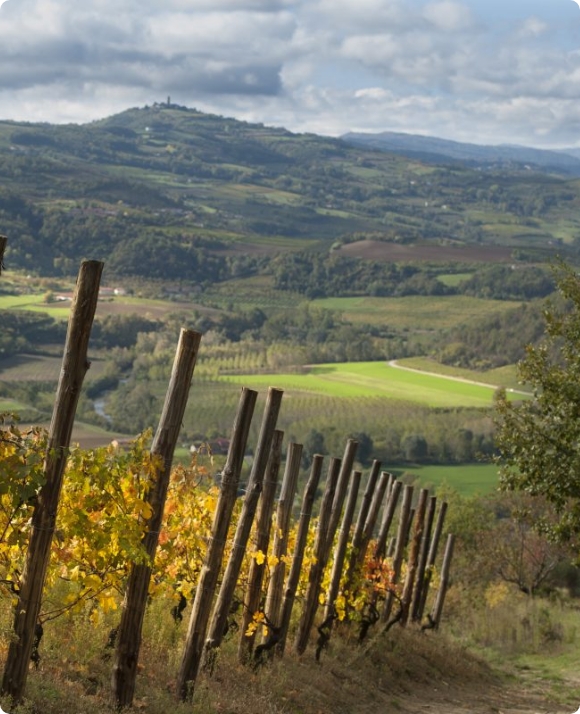
From about 12 million years ago until 5 million years ago, during the Miocene epoch, sediments accumulated on the seabed that today make up the stratified rocks of the area.
The age ranges from the Langhian (15.9-13.8 Ma) to the Serravallian (13.8-11.6 Ma) to the Tortonian (11.6-7.2 Ma) and finally to the Messinian (7.2-5.3 Ma). During this long period of time, conditions changed considerably both in terms of sea depth and basin shape. The consequence was that the rocks recorded these changes by varying in composition and texture, generating distinct geological formations:
Soils
Murazzano Formation
(Langhian-Serravallian)
Composed of marls very rich in limestone and fine sand layers. The soils that develop on this formation are very calcareous, rich in silt and very fine sand. The Murazzano Formation is found only at the highest elevations of the municipalities south of Clavesana and Belvedere Langhe.
Soils
Lequio Formation
(Serravallian)
Caratterizzata da un’alternanza tra strati di marna argillosa e, in misura minore, di sabbia. I suoli risultano quindi limosi con una discreta percentuale di argilla e sabbia e decisamente calcarei. Sono riscontrabili nella zona del Barolo nella parte centro meridionale di Serralunga, sul versante orientale di Monforte e a Barbaresco nella zona di San Rocco Seno d’Elvio e Treiso. Troviamo inoltre la Formazione di Lequio diffusamente anche nel Dogliani, nei comuni di Dogliani, Farigliano e Clavesana.
Soils
Sant’Agata
Fossili Marls
(Tortonian-Messinian)
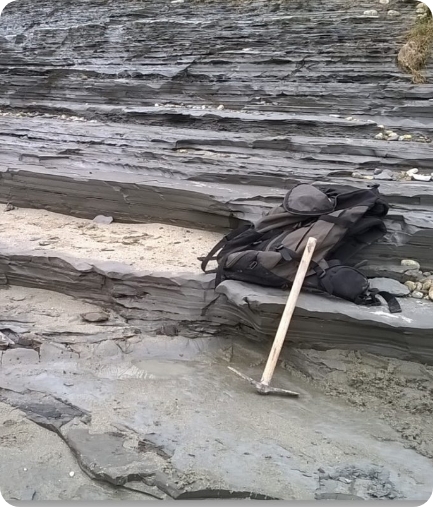
This is the most common and widespread formation in the Barolo and Barbaresco Langa. They are composed almost entirely of marly layers with little sand. The soils present a significant percentage of fine sediments, silt and clay. They are further subdivided into:
- Typical: composed almost entirely of silt. Present in the municipalities of Grinzane Cavour, Verduno, Santa Maria di La Morra and the lower part of Castiglione Falletto and
Soils
Diano Sandstones
(Tortonian)
Sandy layers originating from submarine landslides. The soils are therefore very rich in sand, less calcareous and with a low clay content. Widespread in the zones of Monforte, Castiglione Falletto, Barolo, Diano d’Alba.
Soils
La Morra Conglomerates
(Messinian)
Composed of large banks of pebbly layers. They are present only in the eponymous municipality and generate soils rich in gravel.
Soils
Gypsum Vein Formation
(Messinian)
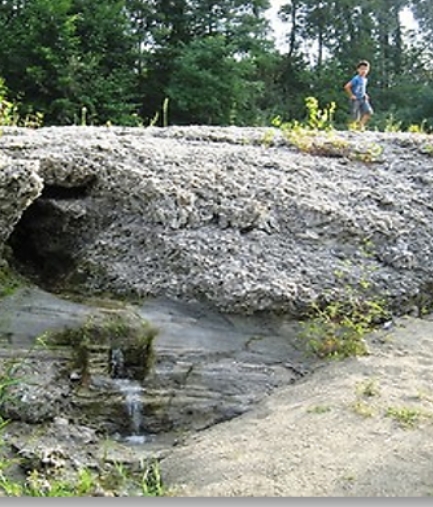
Characterised by alternation between clay marls and layers of gypsum in large crystals. The soils are therefore similar to those of the Laminated Sant’Agata Marls but enriched by the gypsum which increases soil fertility. Found on the west-facing slope of the La Morra and Verduno hill.
Soils
Cassano Spinola Formation
(Messinian)
Divided into two areas between the municipality of La Morra and Verduno. The first composed of sands with very little limestone, the second more marly and similar to the Laminated Sant’Agata Marls.
Soils
Pliocene
Marls
(Messinian)
Present only in a small portion of the municipality of Cherasco and characterised by a balanced distribution of sand, silt and clay and a lower amount of limestone.
Discover the varieties
The eight grape varieties protected by the Consortium

