Historical background
The origins of this aristocratic wine are intertwined with legends of various origins: some say that the Gauls came to Italy because they were attracted by the wine of Barbaritium, of excellent quality, while others maintain that Barbaresco derives its name from the barbarian peoples who caused the fall of the Roman Empire.
In ancient times the place where the village of Barbaresco stands today was covered by such an impenetrable forest that it allowed the Ligurians – who had taken refuge there – to escape the Roman cavalry. Precisely because it remained outside the boundaries of their domains, the Romans called it barbarica silva: from this expression derives the ancient place name Barbaritium, which evolved into the current Barbaresco.
Prof. Domizio Cavazza, first headmaster of the Royal Oenological School of Alba, was among those who defined this wine (already well-known at the time) in the same period in which Cavour, the Marchioness Falletti and the Savoys were naming as “Barolo” the Nebbiolo cultivated on the other side of the city of Alba, in the second half of the 1800s. Since then, Barbaresco has always “travelled” in tandem with its brother Barolo seeking protection regulations: thus in 1934 the Consortium was born, and Barbaresco became one of the first Italian DOCs – in 1966 – and then one of the first DOCGs, in 1980 (Controlled and Guaranteed Designation of Origin with numerical bottle verification and the State Printing Office strip).
Production Area
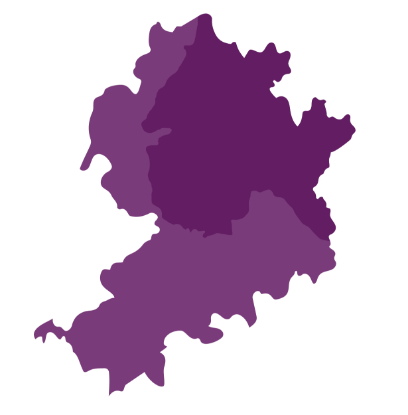
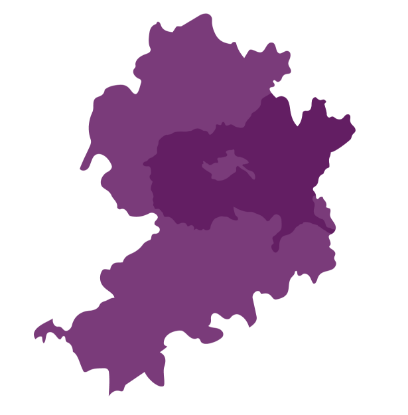
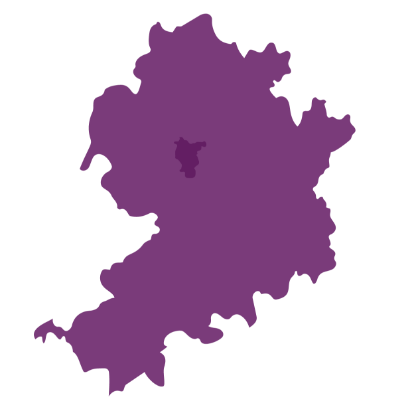
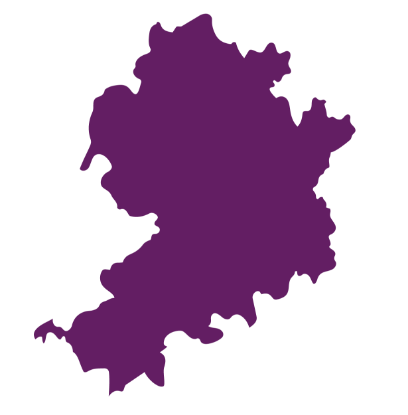
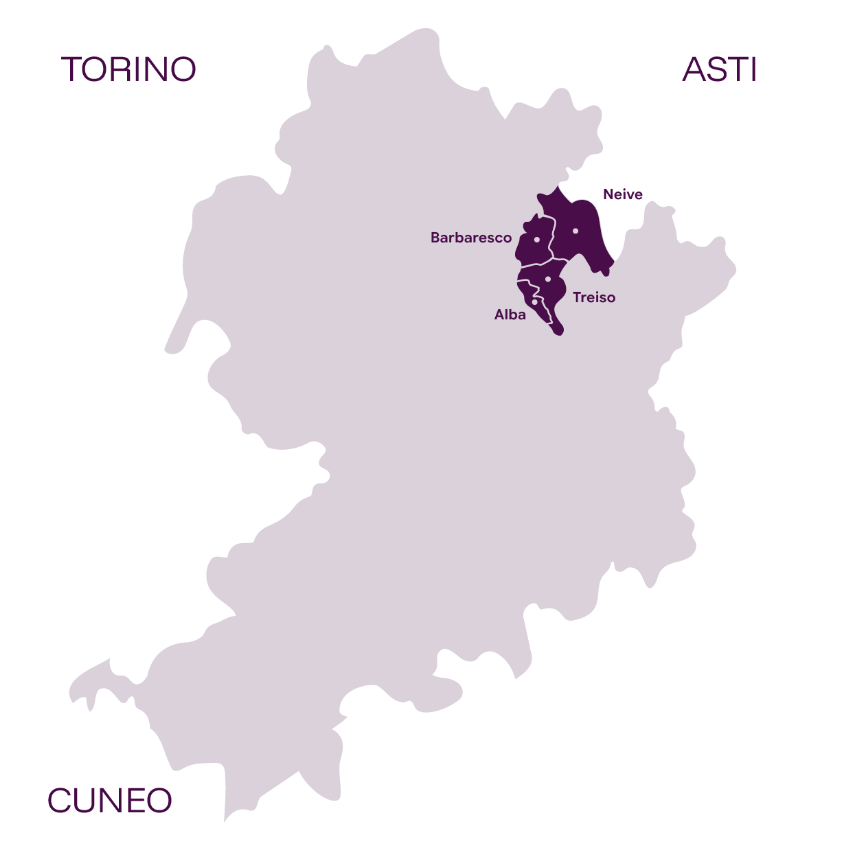
The production zone covers the entire territory of the municipalities of Barbaresco, Treiso, Neive and part of the municipality of Alba.
Characteristic
Barbaresco is produced from 100% Nebbiolo and presents itself with an intense and brilliant colour ranging from ruby red to garnet, and a stimulating bouquet of fragrances that are still fruity yet ethereal, evoking raspberry and red fruit jam, geranium and violet, but also green pepper, cinnamon and nutmeg, hay and wood, toasted hazelnut, vanilla and even anise. It must age for at least two years, of which nine months in oak wood, and after four years it may be called “Riserva”. It reaches its best between 5 and 10 years but can also be much longer-lived.
Geographical
Mentions
In collaboration with the Enoteca and the Province of Cuneo, the Consortium delimited the boundaries of areas using additional mentions (Additional Geographical Mentions) in 2010.