

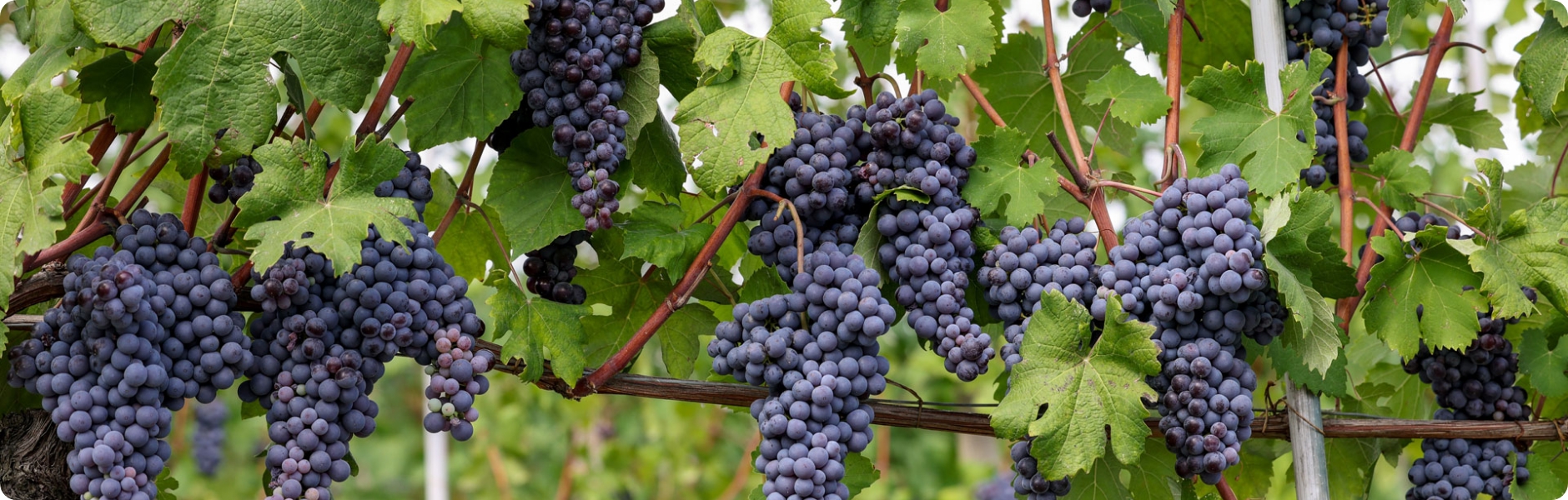
varieties
The varieties of the territory
The varieties of the territory
The wines of the Langhe possess a precise territorial identity traceable to the terroir of origin, which reaches its maximum expression with the traditional single-variety vinification that produces mono-variety wines of strong personality and the indigenous origin of these same varieties.


A precise and traceable identity
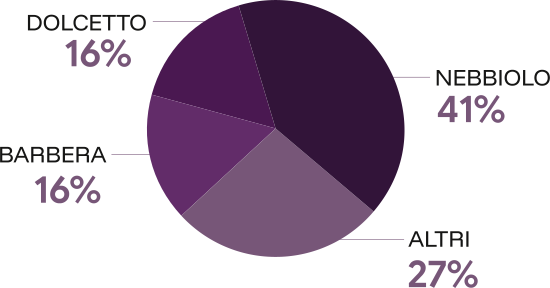
The classic Nebbiolo, Barbera, Dolcetto, Arneis and Pelaverga, but also Favorita and Freisa, have always been varieties present in southern Piedmont and an essential part of local agriculture and economy. In the strip of land crossed by the Tanaro river, these varieties have found their ideal geographical location to develop, thanks to a unique alchemy.
The ancient indigenous varieties around which peasant life and trade in southern Piedmont have revolved for centuries are considered so precious that today the vine-covered slopes of Langa, Roero and Monferrato have become a World Heritage Site under UNESCO protection.
In Langa, the most widespread traditional varieties are Nebbiolo, Dolcetto, Barbera and Moscato (in smaller quantities Pelaverga, Freisa, Favorita and Nascetta), while the most represented international varieties are Chardonnay, Sauvignon, Cabernet Sauvignon, Merlot and a few others.
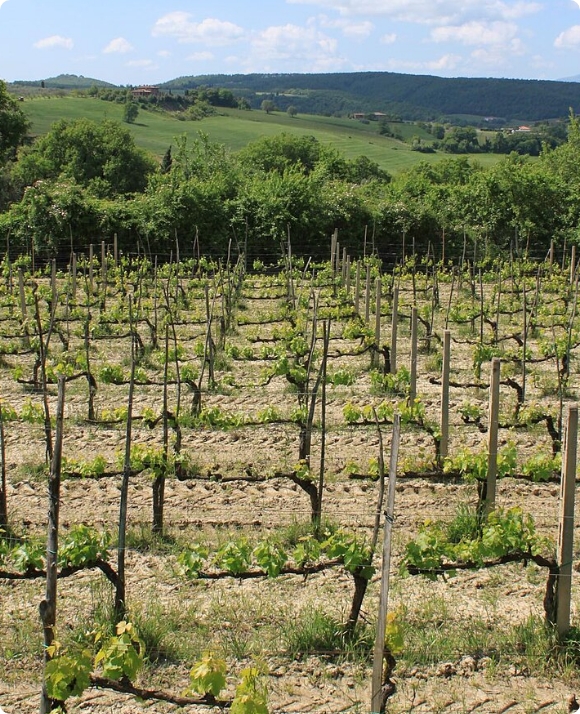
The Guyot System in the Langhe
The Guyot system in the Langhe is the most widespread vine training and pruning method. It is a low-expansion counter-espalier that produces the classic rows and is suited to low-fertility soils, often dry and steep hillsides. Pruning involves a fruiting cane of 6-10 buds to be bent in an arch or horizontally in the direction of the row, and a spur of 1-2 buds for renewal in subsequent years. In the classic Guyot, the planting spacings are variable, ranging from 2.40-2.80 metres between rows and 80-100 centimetres within the row, depending on vigour, the variety-rootstock combination and soil fertility. It has a simple structure that facilitates pruning.
Advantages of Guyot Pruning
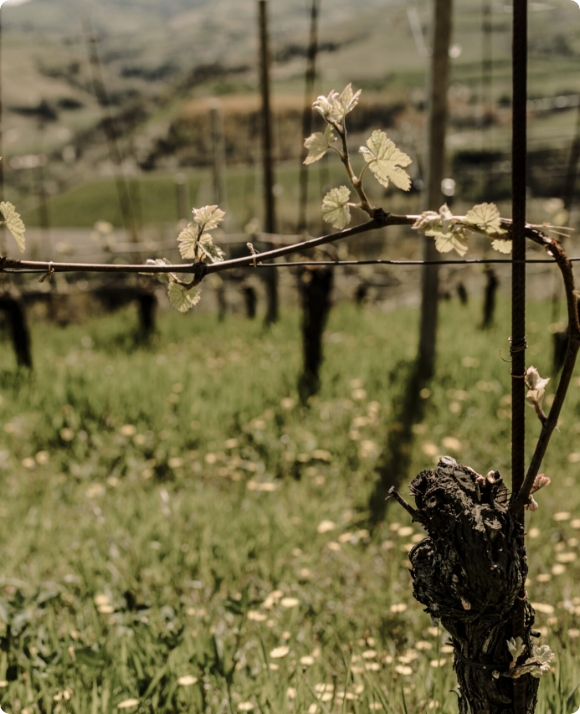
Among its advantages: excellent leaf exposure, adequate planting density, good production quality, vegetative stimulation for weaker varieties. On the other hand, it is necessary to renew the pruning cane annually, with subsequent tying; the clusters are very exposed to the sun, so they can present problems for ripeness management in early varieties and the risk of sunburn. In fresh environments with vigorous rootstocks, it presents excessive vegetative stimulation, which forces frequent green pruning.
Discover the Denominations
Explore the denominations protected by the Consortium

