
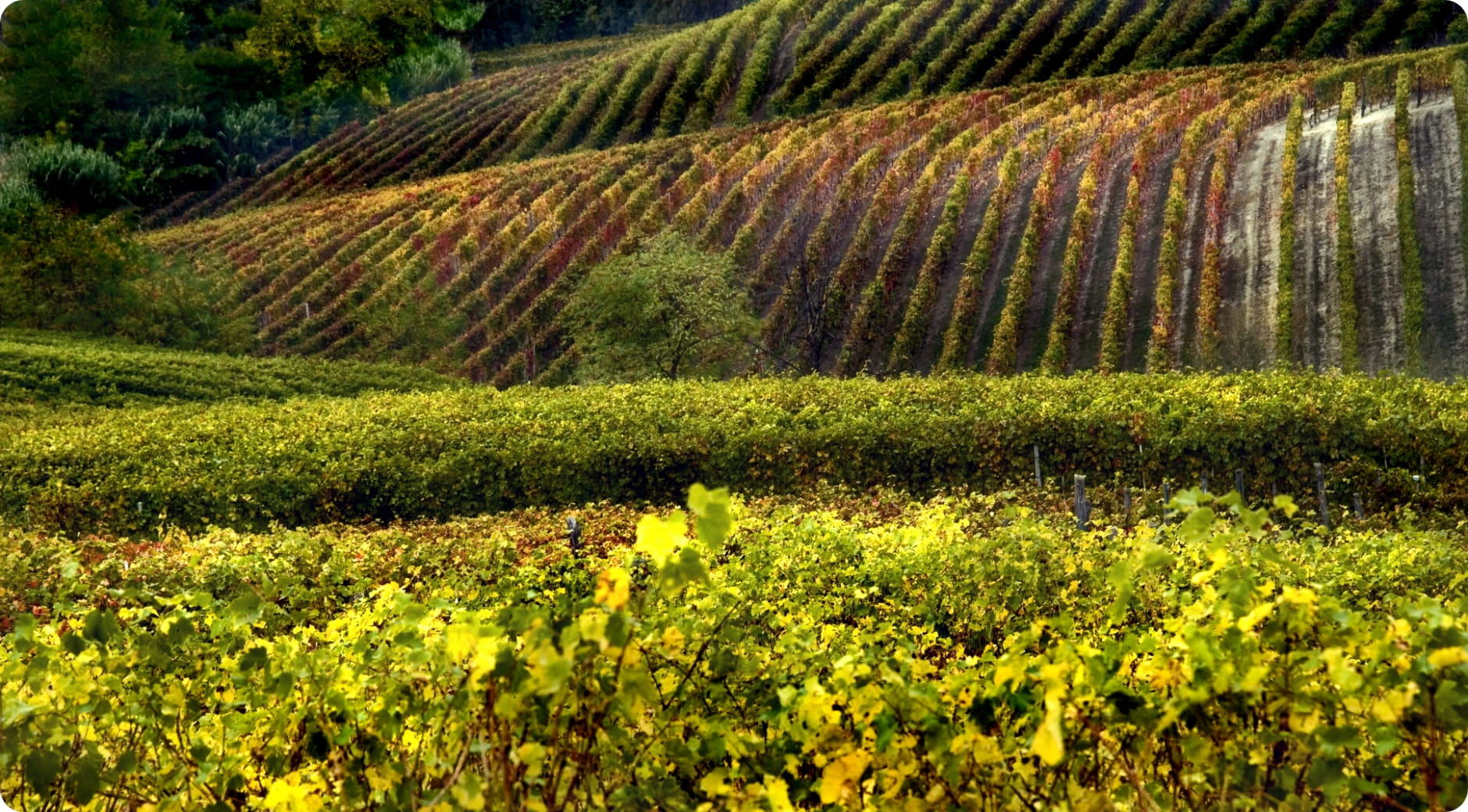
Characteristics
Red wine
Phenological periods:
Budbreak: April
Flowering: June
Véraison: Auust
Ripening: October
Harvest: Second half of October
Training and Pruning
Counter-espalier with long or mixed pruning.
Nebbiolo •
Nebbiolo •
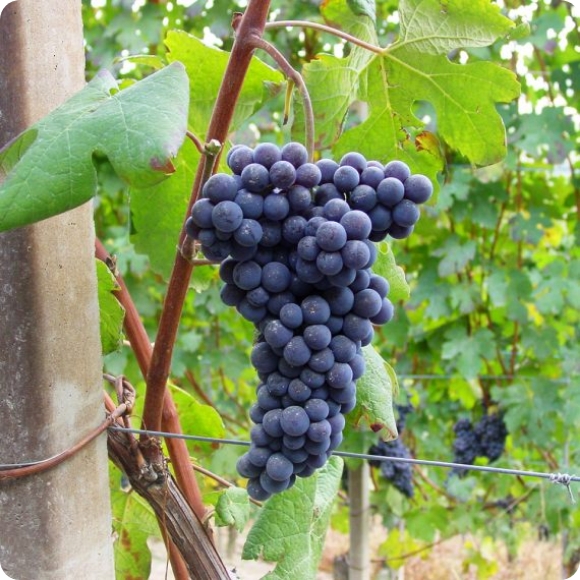
Nebbiolo
The Queen of Black Grapes
It is the oldest indigenous dark-berried variety of Piedmont, one of the most noble and precious in Italy. Its name would derive from “nebbia” (fog): according to some, because its berries give the impression of being “fogged”, covered by abundant bloom; according to others, because the late ripening of the grape pushes the harvest to the arrival of the first autumn fogs.
Also known as the “queen of black grapes”, it requires careful and laborious tending; for this reason its cultivation has gone through periods of splendour and obscurity, but has never been abandoned by local viticulturists, who are aware of the very high quality of the wines obtained from it. It is very demanding in terms of soil position and exposure, tillage and fertilisation. Calcareous and tufaceous soils are ideal for this variety, which buds early between mid and late April.
It reaches ripeness rather late compared to others, in the first half of October. Fairly sensitive to sudden temperature fluctuations, it benefits from day-night oscillations during the ripening phase, but the richness of tannins in its skin requires well sun-exposed hillside positions, preferably south to south-west, between 200 and 450 metres above sea level, sheltered from frost and spring cold.
From it come strong and powerful wines, which often best express their characteristics following slow ageing. The Nebbiolo variety is characterised by a marked sensitivity to both climatic and soil factors: temperature, wind, humidity, water capacity, limestone, texture. For this reason, over an area of just a few kilometres, it is possible to produce profoundly different wines.