Historical background
There has traditionally been a very strong relationship between Dolcetto and the Dogliani area. The spokesperson for this bond was President of the Republic Luigi Einaudi, who was able to create decisive impetus for the enhancement and establishment of the wine from his native region. The presence of the Dolcetto variety on these hills seems to have been confirmed as far back as the year 1000, while the first document preserved in the Dogliani archives in which the Dolcetto variety is mentioned dates back to 1593. The recognition of the Controlled Designation of Origin for Dolcetto di Dogliani was granted in 1974, while the DOCG was officially recognised in 2005.
Production Area
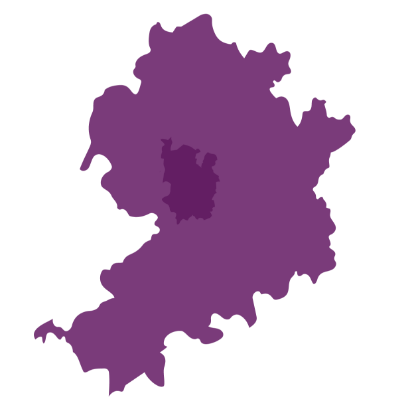
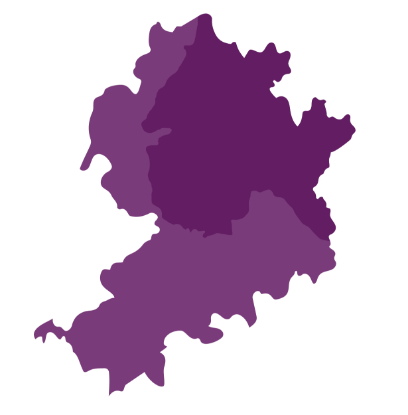
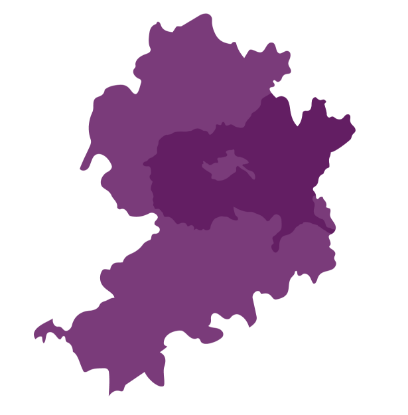
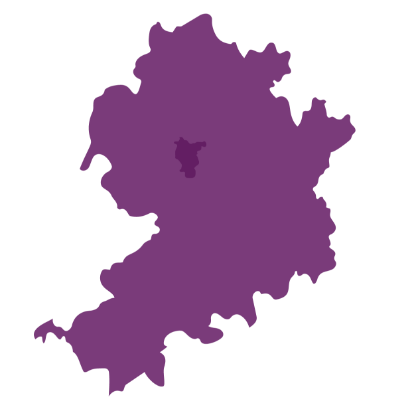
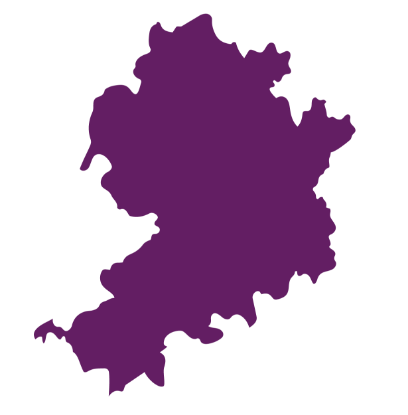
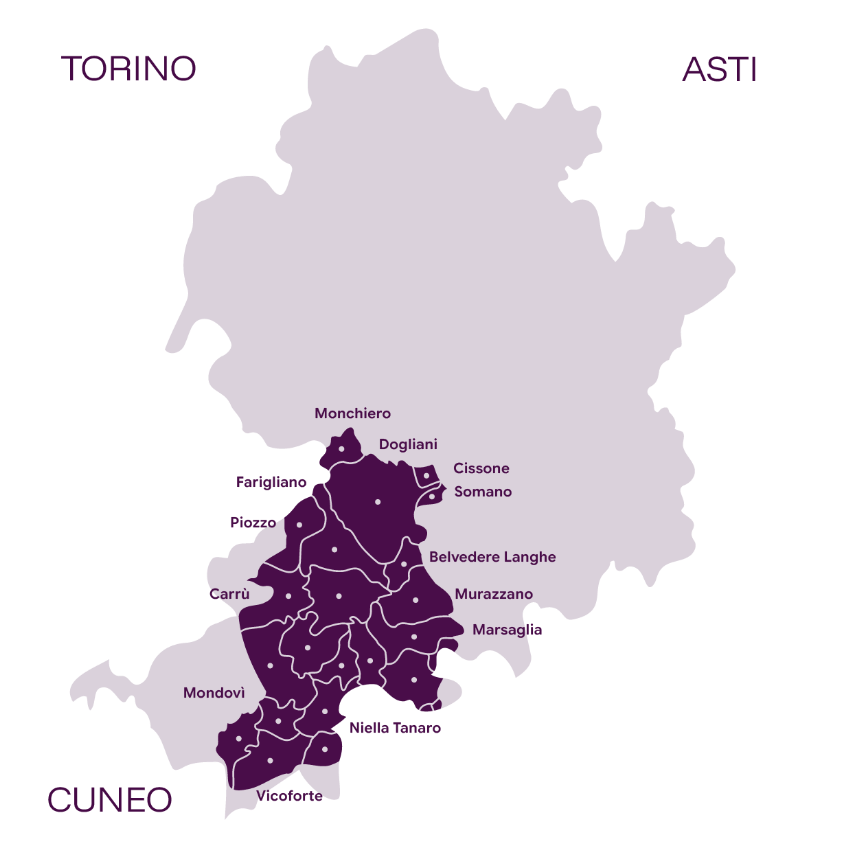
The Dogliani DOCG production zone is located in southern Piedmont, in the lower Langhe. The municipalities that make up the Dogliani are traditional rural villages: some, such as Dogliani, Farigliano and Clavesana, are located along the rivers that divide the plains from the hills and were founded in Roman or pre-Roman times, while the others – Bastia, Belvedere Langhe, Cigliè, Monchiero, Rocca Cigliè, Roddino, Somano – were all built in the medieval period, high on the hills, to defend against Saracen invasions.
Characteristic
Dogliani has an intense ruby red colour with violet highlights, an intense aroma of flowers and fresh fruits such as blackberry and wild cherry, a dry and harmonious flavour with a pleasant, finely almond-like and fragrant aftertaste; the moderate acidity lends a touch of singular liveliness.
Geographical
Mentions
In 2018, 76 Additional Geographical Mentions were officially recognised.